
The Importance of Developing Human Skills in an AI World



It wasn’t long ago that conversations about AI in the workplace were largely hypothetical. Would employees use it? Would organizations allow it? Would it change how work gets done? For most organizations, those questions felt distant enough that they could be set a side for a later date.
That time has come. AI tools are now part of everyday work for a growing number of the workforce, and the conversation has shifted from whether to adopt AI to what it actually means for people, teams, and organizations. The benefits are becoming clearer, but so are the questions worth asking.
Wiley Workplace Intelligence surveyed 1,500 individuals about their sentiments towards AI. We explored if and how they use it at work, which skills they believe will matter most in an AI-shaped future, and where they see the trade-offs. What emerged is a picture of a workforce that is engaged and clear about what the future requires yet not always translating that awareness into meaningful action.
Employees Know Which Skills Will Matter Most
We asked employees which skills they think will remain important in an AI-driven workplace, and they are largely unified in their answers. 87% of AI users say critical thinking and emotional intelligence will remain essential. Communication comes in at 83% and leadership at 82%. These aren’t abstract values, employees are telling us they see a future where human judgement, empathy, and the ability to lead others are more important than ever, not less.
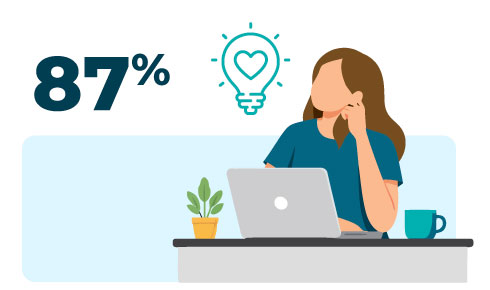
87% of AI users say critical thinking and emotional intelligence will remain essential.
What makes these findings even more interesting is that employees aren’t just expecting these skills to remain relevant. They expect them to grow in significance. 81% of AI users say judgement and decision-making are becoming more important because of AI. When a tool can generate a first draft, run analysis, or summarize a meeting, the work that remains like deciding what to do with that output, catching what’s wrong with it, and communicating it clearly to others, becomes the most critical work of all.
Employees aren’t confused about what the future of work requires. They’re naming the right skills. The question is whether organizations are creating the conditions for those skills to actively develop.
What’s Shifting in Day-to-Day Development
At the same time, employees are open about what’s changing in how they develop skills on a daily basis. 90% say they’re building writing and editing skills less because of AI. 80% say the same about research and fact-finding. 71% say problem-solving from scratch.
Skills employees say they are developing less because of AI:

90% Writing and editing

80% Research and fact-finding

71% Problem-solving from scratch
It’s worth pausing on what those skills are. Writing, research, and working through a problem without a ready-made answer aren’t unrelated competencies. They’re the foundational skills that build critical thinking, refine judgment, and develop the kind of communication that AI simply can’t replicate. When AI handles more of that execution work, employees naturally get fewer opportunities to build the very capabilities they say will matter most.
Only 8% of AI users say they see no significant trade-offs to using AI over human effort. That leaves 92% who see real costs. 72% flag the risk of errors going undetected. 58% note concerns about reduced creativity or originality. And 48% say a sense of reduced personal accountability is part of the cost of relying on AI. The fact that employees can identify these trade-offs so clearly shows that they’re not using AI blindly. But awareness of a trade-off doesn't automatically mean they’re actually doing something about it.
The Gap Between Knowing and Doing
The numbers tell an interesting story. 87% of AI users say human skills like critical thinking and emotional intelligence will remain essential workplace skills. However, only 42% say they are actively and intentionally working to develop those skills. That means more than half of employees who understand exactly what the future requires are not actively prioritizing it.
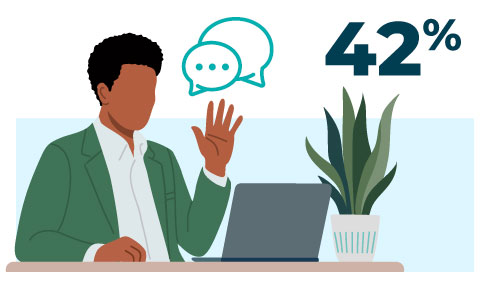
Only 42% of AI users say they are intentional about developing their human skills.
This isn’t about employees lacking motivation, the data is clear on that. What’s often missing is a clear, personalized plan that turns good intentions into deliberate action. A personalized development framework, grounded in how each individual thinks, works, and approaches challenges, gives both the employee and their manager a concrete place to start. Without that structure, the intention to grow tends to stay an intention.
Where Organizations Have Room to Step In
Employees have done remarkable work on their own. 66% of AI users feel prepared to use AI effectively at work, 42% through informal learning, and 36% with no training at all. They figured it out because they wanted to.
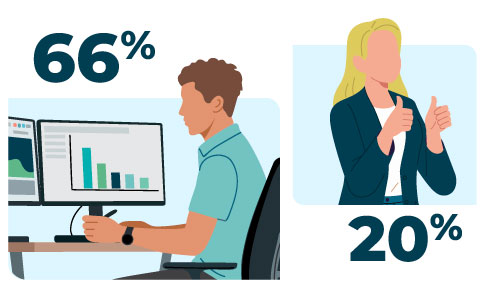
66% of AI users feel personally prepared, but only 20% feel their organization is equipping them well.
But individual initiative has a cap. Only 20% of AI users feel their organization is equipping them well for AI success. That gap between how prepared employees feel personally and how well-supported they feel organizationally, is one of the most significant findings in the data. It points to a real opportunity that most organizations have not yet taken.
When organizations do step in, the difference is measurable. Employees who receive formal training report higher preparedness (79%), higher positive sentiment (79%), and stronger optimism about the future workforce (43%) compared to those who are self-taught. And clarity matters just as much as investment. 31% of employees don’t know whether their organization has an AI policy, and that group shows lower adoption, lower positive sentiment, and lower preparedness than even employees who know no policy exists. Knowing where the organization stands gives employees something to anchor to.
The Human Skills Conversation Is Just Getting Started
39% of AI users are optimistic about AI’s impact on the future workforce, and that number rises steadily as knowledge, experience, and organizational support increase. The momentum is already there. What the data is asking for now is something more specific—helping employees grow with intention rather than by default.
Getting this right isn't just about having the right technology. It's about understanding your people well enough to develop them with intention.
PXT Select® assessments give leaders and managers clear, data-driven insights into how each person thinks, works, and approaches challenges, so development conversations are grounded in data. When leaders understand how their people think and work, intentional development stops being an aspiration and starts being the plan.
Wiley Workplace Intelligence conducts in-depth research on key workplace issues by gathering insights from individual contributors, managers, and leaders. Wiley Workplace Intelligence then analyzes these findings to provide actionable solutions that are shared in our blog.
Did You like This Content?
Join our newsletter to get insights,
updates and more!