
The Loyalty Illusion: Why Job Fit Matters



At some point in your career, you may have stayed in a job a little longer than you meant to. Maybe the timing didn't feel right, or a move felt like too big of a risk. You kept showing up and doing good work, and on paper, that reads like loyalty. But planning to stay and wanting to stay aren't always the same thing, and the difference isn't always easy to spot.
Now think about what happens across an entire organization when the job market feels uncertain. People who stay out of caution can look just as committed as the ones who truly love their work. They meet deadlines and rarely raise concerns. Leaders may not notice the difference until the market settles and those employees finally have better options.
Wiley Workplace Intelligence surveyed 1,600 employees to understand what's really behind their plans to stay. We asked how likely they were to be with their employer a year from now, what keeps them there, and whether they would stay if the job market were ideal. We also explored how they feel about their work, their growth, and how well their role fits them.
The findings show that loyalty is often more fragile than it appears. The good news is that the warning signs are there if you know where to look, and many of them point back to something organizations can act on.
Retention Numbers Don't Tell the Whole Story
On the surface, retention looks strong. 82% of employees say they're likely to be with their employer in 12 months. But when we asked whether they would stay if the job market were ideal, the answer wasn’t always so certain.
One in five employees say they’ll probably stay, yet wouldn’t clearly choose to stay if they had other options. We call this group the loyalty illusion. They show up in retention numbers as employees who are staying, but they aren’t necessarily committed to staying.

54% of employees say economic uncertainty makes them more likely to stay.
For many people, the current market is part of the reason they’re staying put, and 26% say they stay mainly because leaving feels risky. That kind of caution can keep people in their jobs for now, but it doesn’t build real commitment.
Not Every Stayer Is Staying for the Same Reason
When we looked more closely at the employees who plan to stay, three groups emerged. Content stayers (62%) would stay even in an ideal market and aren't staying out of fear. Stuck stayers (13%) stay because leaving feels risky, and they either wouldn't clearly stay in an ideal market or aren't excited about their work. Cautious stayers (25%) fall somewhere in between.

Only 43% of employees who plan to stay despite their doubts feel stuck.
Stuck stayers are a small group, but they make up a big share of the employees who plan to stay despite their doubts. They're also harder to spot than you might expect. More than half of stuck stayers (53%) say they've held back an idea or concern in the past year to avoid appearing difficult, compared to 24% of content stayers. And only about half (49%) feel they can be honest about their career concerns without it being held against them.
The employees with the most doubt are often the least likely to say so.
When a Role Uses Someone's Strengths, They're More Likely to Stay
What separates content stayers from stuck ones? One meaningful difference is how well the role fits the person in it. 88% of content stayers say their role makes good use of their strengths. Among stuck stayers, that number drops to 64%.
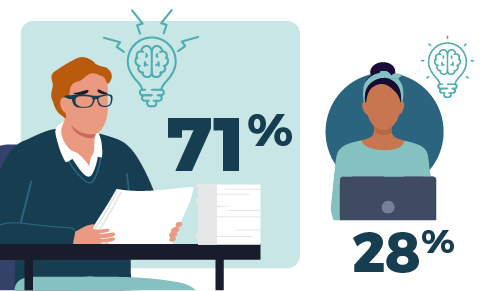
Doubt about staying is 71% when strengths go unused, vs. 28% when they’re used.
Employees whose role makes good use of their strengths are more likely to stay. Having the energy to grow in their role mattered too. In fact, it was the strongest sign of lower doubt among the factors we tested, and learning on the job was another good sign.
This builds on our earlier research on hope and joy at work, which found that 84% of employees in good-fit roles regularly experience joy, compared to 42% in poor-fit roles. Fit shapes how people feel about their work day to day. This study suggests it also shapes whether they would choose to stay.
Look Inside Before Looking Outside
Doubts about staying also change the longer someone is in a role. In the first year, 29% of employees aren’t sure they’d stay if they had other options. That number climbs to 40% at three to five years, then drops to 27% at ten years or more. Those middle years, when the early excitement has worn off and the next step isn't always clear, carry the most risk.
Part of the reason may also be that fit isn’t fixed. Over a few years, a role can change quite a bit. Responsibilities grow and priorities shift. In our research, 48% of employees said their organization had changed “a lot” in the past two years. People change too. They build new skills, discover what energizes them, and develop interests they didn’t have when they were hired. A role that was a strong match on day one can slowly move out of alignment, even when the person is still doing good work.

64% of employees would consider a different role inside their company before looking elsewhere.
In other words, many employees would rather find a better fit where they are than start over somewhere new. Those open to an internal move also show less doubt about staying (28%, compared to 46% of everyone else). All of this makes the three-to-five-year mark a natural time to revisit fit. A conversation about strengths and what's next can help someone picture a future inside the organization before they start looking for one somewhere else.
What Organizations Can Do
These findings point to a few practical ways organizations can turn fragile loyalty into real commitment.
Look beyond the retention rate. High retention is a good sign, but it doesn’t explain why people are staying. Asking whether employees would choose to stay, and not just whether they plan to, gives a more honest picture of commitment.
Treat fit as an ongoing conversation. Roles change and people grow, so it’s worth checking in on fit regularly, especially around the three-to-five-year mark, when doubts about staying peak. Objective insight into how someone works can turn those check-ins into focused conversations about what’s next.
Make internal moves a real option. Most employees would consider another role inside the company first. Clear paths and open conversations about those options give people a reason to grow where they are.
Real Loyalty Starts with the Right Fit
Strong retention is a good start, but it’s only part of the story. The opportunity for leaders is to make sure people stay because the role is right for them. When someone’s role fits how they think and what they’re good at, they don’t need a tough job market to keep them around. They stay because they want to.
That starts with understanding how well someone’s thinking style, behavioral traits, and interests match what their role asks of them. Assessments like PXT Select® can help bring that into focus, both at hiring and as people grow. When people are in roles that truly fit, their loyalty doesn’t have to be an illusion.
Wiley’s suite of professional solutions gives organizations the insight and shared language to better understand and develop their people, from making confident talent decisions with PXT Select, building better teams with The Five Behaviors®, to creating engaged, adaptive cultures with Everything DiSC®, and unlocking leadership potential with The Leadership Challenge®.
Wiley Workplace Intelligence conducts in-depth research on key workplace issues by gathering insights from individual contributors, managers, and leaders. Wiley Workplace Intelligence then analyzes these findings to provide actionable solutions that are shared in our blog.
Did You like This Content?
Join our newsletter to get insights,
updates and more!